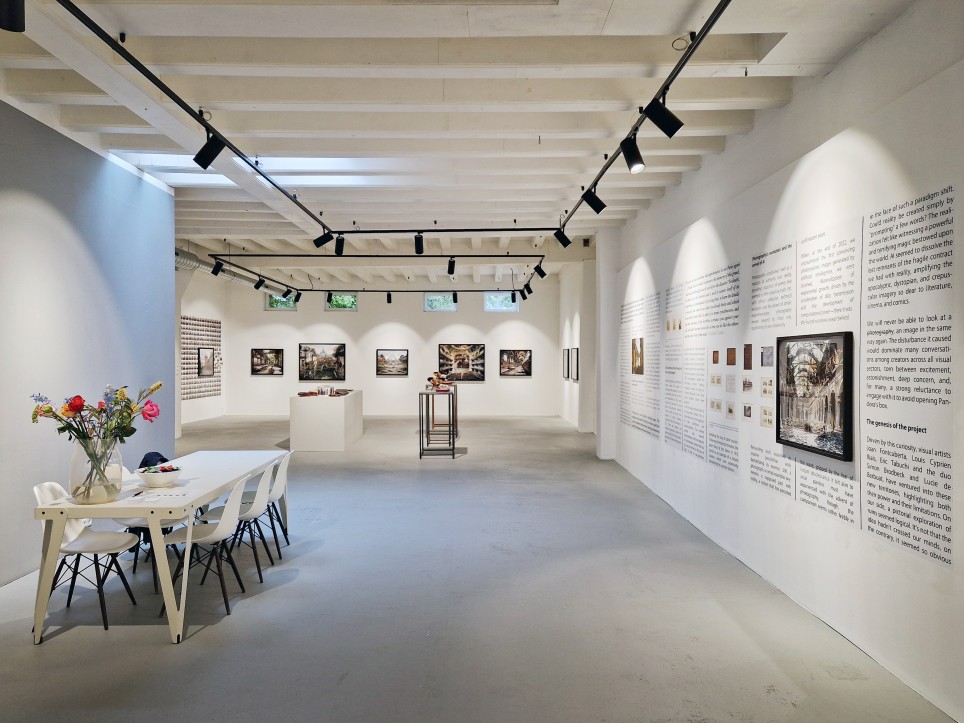
What if the rise of AI spelled our own obsolescence? What if, in an instant, Paris, the City of Light, fell dark and silent, its streets emptied, like a once-mighty metropolis of a fallen empire?
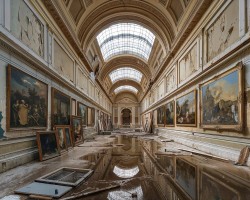
In 1796, Hubert Robert, a great artist of poetic imagination and curator of what would become the Louvre Museum, painted the imagined ruins of the museum’s Grande Galerie, scarcely had it been completed. The Enlightenment humanist thinker Diderot declared of the painter, “A palace must be ruined in order to become an object of interest.”
In the nineteenth century, photography was born and unsettled the world of representation. It quickly demonstrated a strong affinity with the subject of the ruin, both in its required exposure time and stillness, and in a logical complementarity of meaning, since photography initially constituted a response to erasure, an attempt to wrest a moment from time: in a sense, “the ruin disappears, photography preserves.”
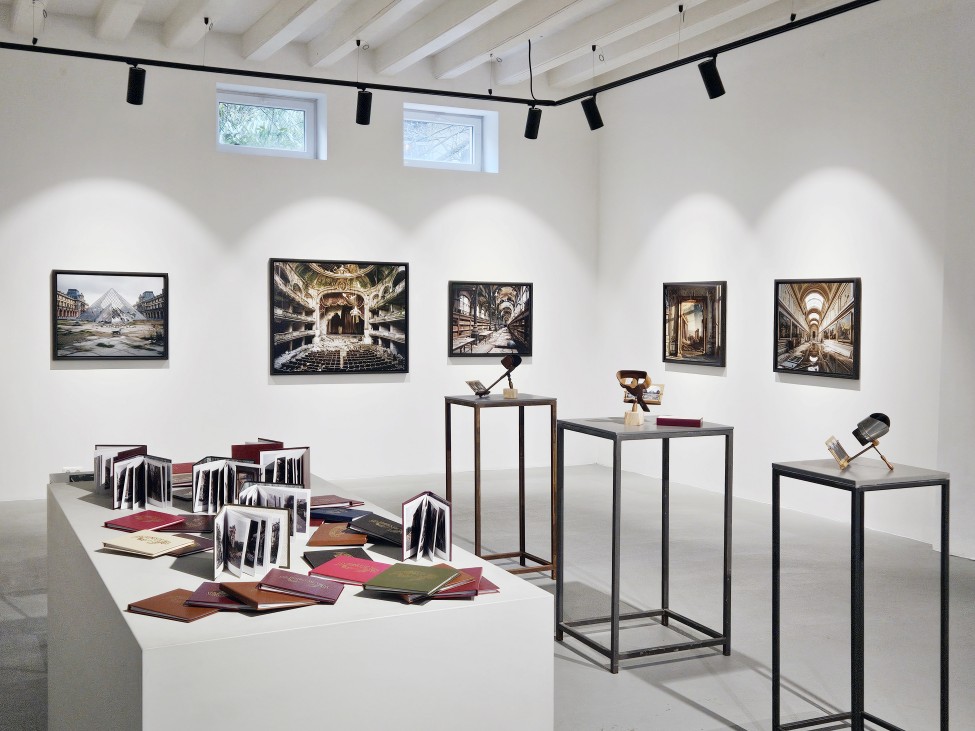
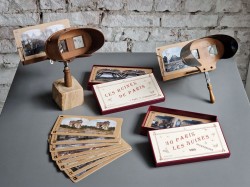
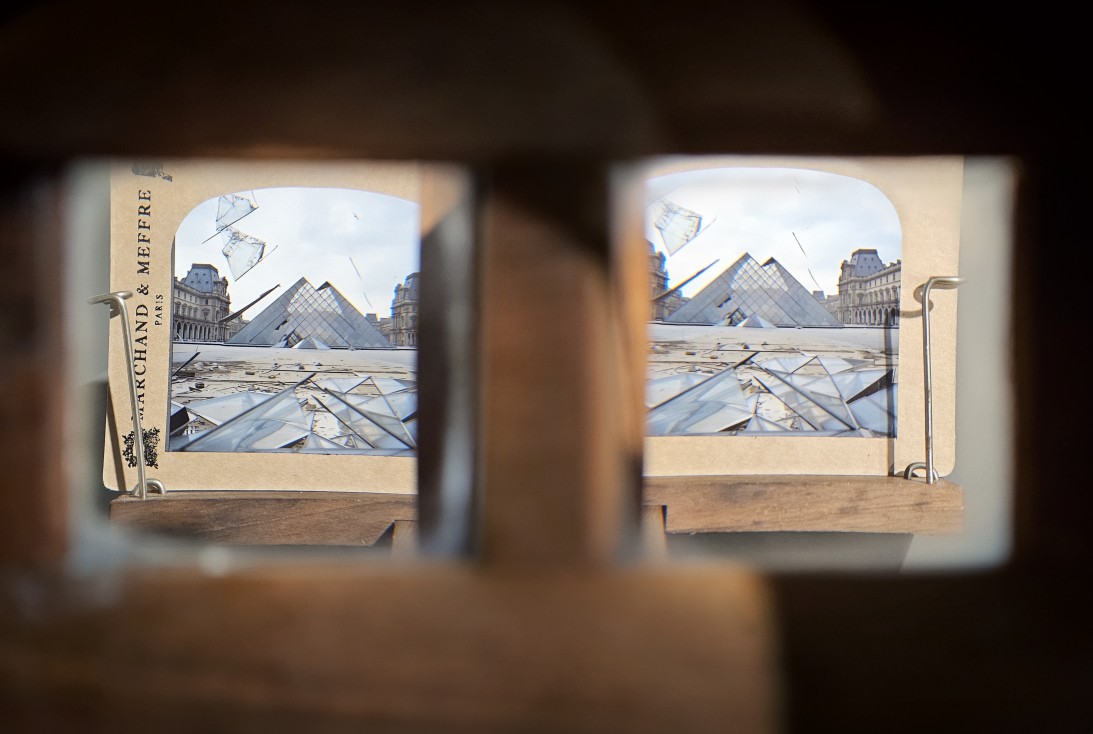
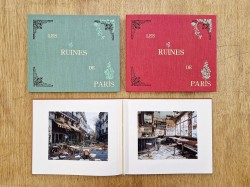
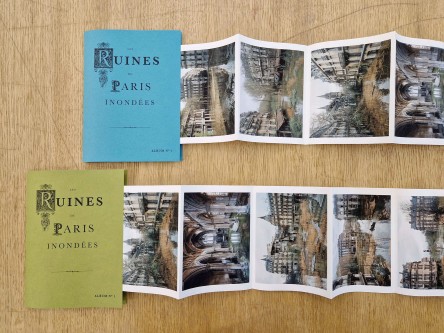
The first photographic album was published by Maxime Du Camp, who in 1851 documented the vestiges of Egypt and the Middle East to great acclaim. Twenty years later, after the violent suppression of the Paris Commune in 1871, photographers flocked to the still-smoldering debris to produce numerous albums, sometimes entitled Les Ruines de Paris, as well as stereoscopic views. Photography thus asserted its early bond with the ruin, its circulation and commercialization, a form of ruinsploitation, a precursor to what we now call dark tourism.
Although our relationship to photography has profoundly evolved, until recently it still embodied a promise of indexicality, the idea that what appears in the image once stood before the lens, a tacit pact with reality. At the end of 2022, the rise of generative artificial intelligence, along with its power of imitation and deception, destabilized this already fragile conception, opening an abyss beneath our feet, likely comparable to that faced by painters at the advent of photography.
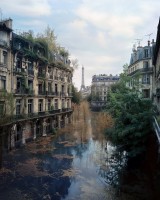
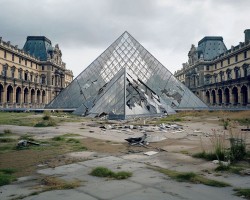
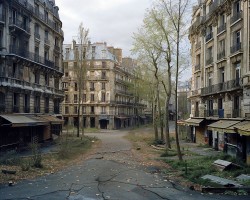
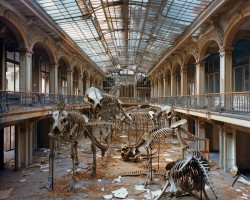
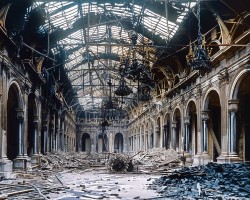
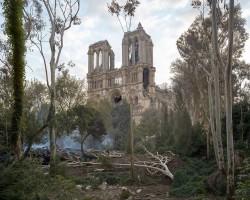
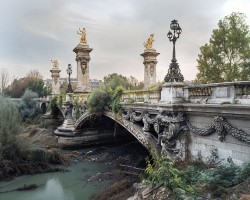
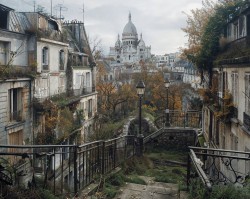
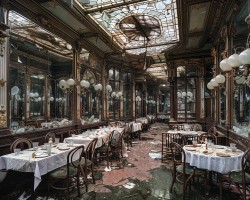
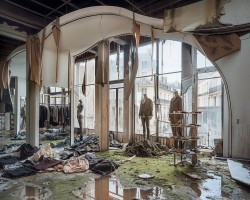
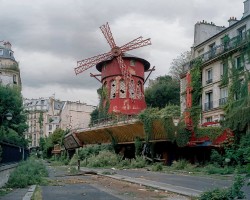
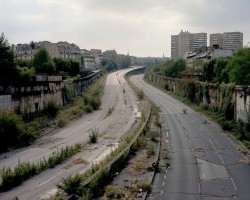
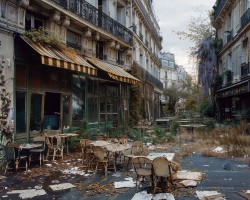
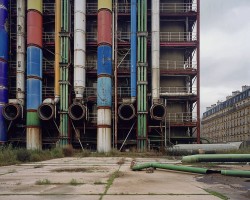
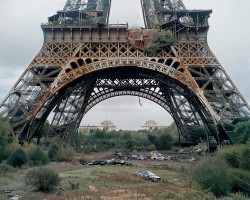
It was out of this vertigo that the series Les Ruines de Paris emerged, as a form of conjuration, a game of deception between anticipation and the evasion of announced obsolescence. The project became for us a way to further examine the ties between the city, art, and, more specifically, photography, and their shared relationship to the ruin and its representations.
At the end of a laborious process combining archival materials, modified images, personal photographs, and textual prompts, we devoted more than 1,000 hours and generated nearly 50,000 images in order to select 80, reenacting our own ruinomania within our own city and reactivating the dystopian imaginary of literature, cinema, and comics, at the intersection of historical and personal references.
This work has been published in a book by Albin Michel in 2024.
STEREOSCOPES & ALBUMS
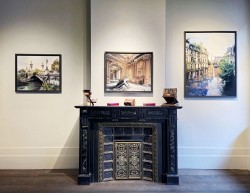
INSTALLATION VIEWS